- New
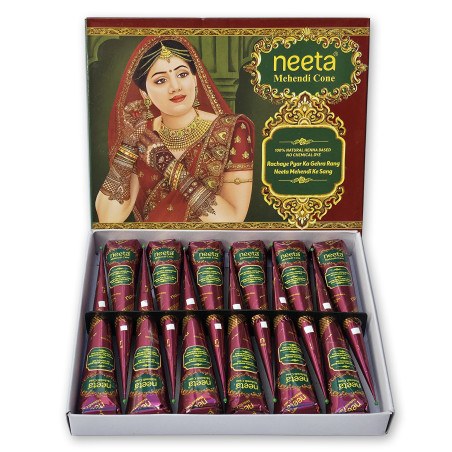


Neeta henna, box of 12 cones – ready-to-use natural henna paste that gives a brown colour on the skin. It is made by an Indian manufacturer with decades of experience in henna pastes. On the skin the colour develops from orange to dark brown, and the fine tip of the cone helps you draw thin lines and precise details.
12 cones of 25 g each last a long time: for regular use, events and workshops. In this box the price per cone is at its lowest. The paste is pre-mixed and contains no synthetic dyes. Suitable for mehndi, temporary tattoos, body art and fake freckles.
Production date: July 2026.

Security policy

Delivery policy
The box contains 12 cones of ready-to-use henna paste, 25 g each. It needs no mixing and gives a brown colour on the skin. Used as directed, it is safe on the skin.
The box is meant for regular use. It is a good fit if you do henna designs often, run workshops or decorate a larger group of people at once – at events or parties, for example. The cones come in the manufacturer's box of 12.
In this box the price per cone is at its lowest, and one box lasts a long time. If you need less, there is also a box of 4 cones and a single cone. You will find other henna pastes and brands in the henna tattoo cones section.
Aqua, Henna, Benzyl Alcohol, Terpineol, Eugenia Caryophyllus Bud Oil, Xanthan Gum, Cellulose Gum.
The base of the paste is henna, or Lawsonia inermis, and all of the colour comes from it. Clove bud oil (Eugenia Caryophyllus Bud Oil) is a common ingredient in traditional mehndi pastes. Xanthan gum and cellulose gum adjust the consistency, while benzyl alcohol and terpineol affect shelf life and scent. There are no synthetic dyes at all.
Natural henna colours the skin only in brown and dark brown shades. Other shades come from coloured tattoo pastes, where the colour is a cosmetic dye.
Right after the paste is removed, the design looks light orange. Over about a day the colour develops and darkens to brown. On the palms and the soles of the feet the shade is usually strongest, because the skin takes up the dye best there.
Clove oil and terpineol give the paste a warm, slightly spicy scent. It is noticeable but not strong.
Try the paste on a small area of skin first: apply some to an inconspicuous spot, leave it on for 15–20 minutes and rinse. If no redness or irritation appears within a day, you can use the paste normally.
Even natural henna paste can cause a skin reaction in some people, especially if the skin is sensitive or reacts to essential oils or preservatives. Do not use it on irritated, broken or freshly shaved skin, and keep the paste away from the eyes and mucous membranes.
One 25 g cone gives about 5–10 simple, medium-sized designs. The exact number depends on the size of the designs and the thickness of the lines.
About a week, but there is no fixed time: henna dye colours only the outermost layers of the skin and fades as skin cells renew. On the palms and soles the skin is thicker, so the design lasts longer. On the neck, back and arms it fades faster.
This is normal for natural henna and not a fault in the product. The dye oxidises gradually in contact with air and the warmth of the skin, and reaching the final brown shade usually takes about a day.
The cones keep for 12 months from the production date when stored cool and away from light. The dye does weaken gradually over time, though: a fresh paste has more of it left, so the colour usually turns out deeper and more even.
Both are Indian natural brown henna pastes, and both are used ready-to-use from the cone. There is little practical difference – choose the brand you prefer.
An opened cone can be used several times. Before the next design, squeeze a little paste onto kitchen paper: the paste left in the tip may have stiffened during the break.
Store the cones in a cool, dry place away from direct sunlight. Open only the cone you intend to use – unopened ones keep their properties better.
It does not. Neeta is natural henna, where the colour comes from henna powder (Lawsonia inermis). The ingredients are listed above.

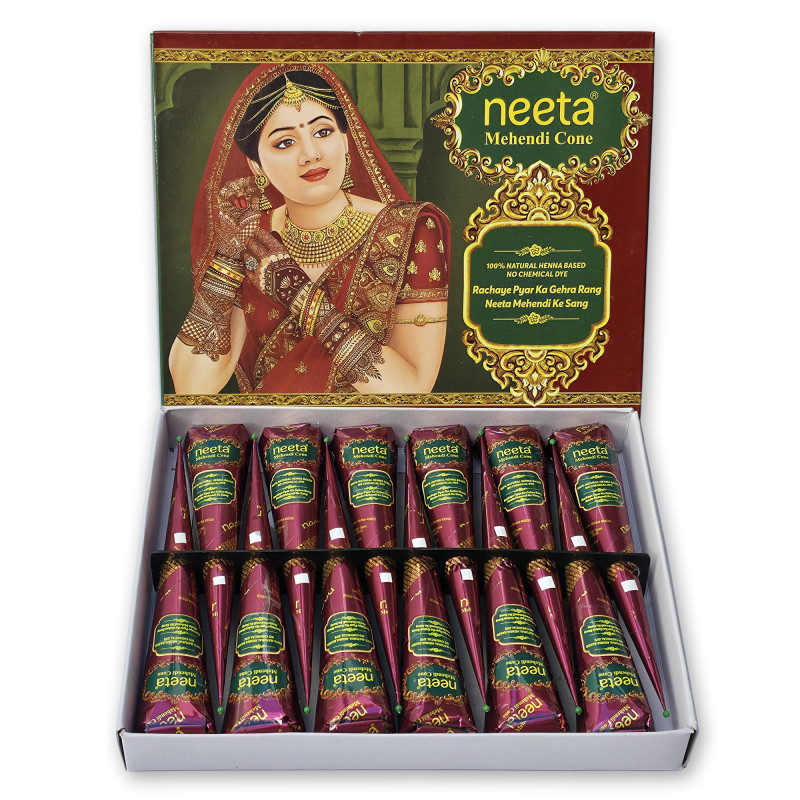
Neeta henna, box of 12 cones – ready-to-use natural henna paste that gives a brown colour on the skin. It is made by an Indian manufacturer with decades of experience in henna pastes. On the skin the colour develops from orange to dark brown, and the fine tip of the cone helps you draw thin lines and precise details.
12 cones of 25 g each last a long time: for regular use, events and workshops. In this box the price per cone is at its lowest. The paste is pre-mixed and contains no synthetic dyes. Suitable for mehndi, temporary tattoos, body art and fake freckles.
Production date: July 2026.